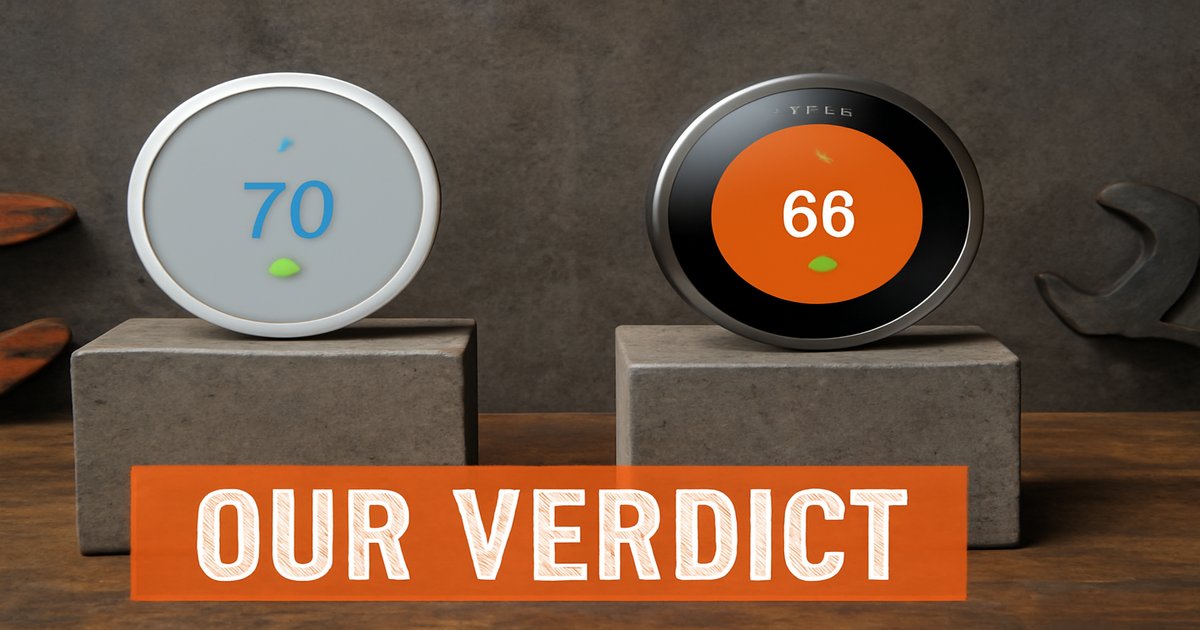
Choosing Between Nest Thermostat E and Nest Learning Thermostat: A Practical Guide
You’ve finally decided to smarten up your home, but the sheer number of smart thermostats out there is mind-boggling. Enter the Nest Thermostat E and the Nest Learning Thermostat, two popular options that promise to save you money and hassle. But which one really deserves a spot on your wall?
| Feature | Nest Thermostat E | Nest Learning Thermostat |
|---|---|---|
| Design | Polycarbonate with frosted display | Metal with high-res display |
| Self-Learning | ✓ | ✓ |
| Compatibility | 85% of systems | 95% of systems |
| Price | Lower | Higher |
| Energy Reports | ✓ | ✓ |
| Remote Sensor Support | ✗ | ✓ |
✅ nest thermostat e Pros
- More affordable than the Learning Thermostat.
- Simple, understated design that blends in easily.
- Easy to install and use for beginners.
❌ nest thermostat e Cons
- Limited compatibility compared to the Learning model.
- No support for remote temperature sensors.
- Frosted display isn’t as sharp or clear.
✅ nest learning thermostat Pros
- Wider system compatibility covers more homes.
- Supports remote sensors for more accurate temperature control.
- Premium design with a high-resolution display.
❌ nest learning thermostat Cons
- Higher price point than the E model.
- Design may stand out more than you’d like.
- Learning curve can be steeper for tech newcomers.
Performance: Smart Learning and Adaptability
The Nest Learning Thermostat and the Thermostat E both offer self-learning capabilities, but the Learning Thermostat does it with more finesse. Over time, it picks up on your habits and adjusts automatically, potentially saving you more money. The Nest E also learns, but it’s a bit more basic in its approach. If you don’t want to fiddle with settings and prefer automation, the Learning Thermostat is your go-to. However, if you’re okay with making occasional manual adjustments, the Thermostat E won’t disappoint.
Build Quality: Design and Durability
The Nest Learning Thermostat feels like a premium piece of tech with its metal finish and vibrant display, great for those who want their devices to make a statement. The Thermostat E, with its polycarbonate body and frosted display, is more about subtlety. It’s not as eye-catching, but it fits seamlessly into most decors. The Learning Thermostat’s robust build might give it a slight edge in durability, but both are built to last.
Value: Cost vs. Features
If you’re on a tight budget, the Nest Thermostat E offers great value. It covers the basics of smart temperature control without breaking the bank. The Nest Learning Thermostat, while pricier, justifies the cost with additional features like broader compatibility and remote sensor support. It’s perfect for those who want top-tier performance and are willing to pay for it. Consider how much you’re willing to invest for a smarter home experience.
Most reviews won’t tell you that both thermostats may struggle with dual-fuel systems. You might also find that the learning feature can be hit-or-miss if your schedule is irregular. Lastly, neither device is a substitute for a well-tuned HVAC system; they can’t fix inefficiencies in your air conditioning or heating units.
Our Final Verdict: Which One Should You Buy?
If you’re looking for an affordable, no-fuss option, the Nest Thermostat E is perfect for you. It’s great for renters or homeowners who want to dip their toes into smart home technology without going all-in. On the other hand, if you want the full package with advanced features and don’t mind paying a bit more, the Nest Learning Thermostat is your best bet. It’s ideal for tech-savvy homeowners who want seamless automation and superior control over their home’s climate.
How do I know if my system is compatible with these thermostats?
Both models have a compatibility checker on the Nest website. The Learning Thermostat supports more systems, but it’s always best to double-check before purchasing.
Can I install these thermostats myself?
Yes, both devices come with instructions for DIY installation. If you’re not comfortable with wiring, hiring a professional is recommended.
How do these thermostats save energy?
By learning your schedule and adjusting temperatures accordingly, both models can reduce energy usage when you’re not home or while you’re asleep, leading to lower utility bills.
