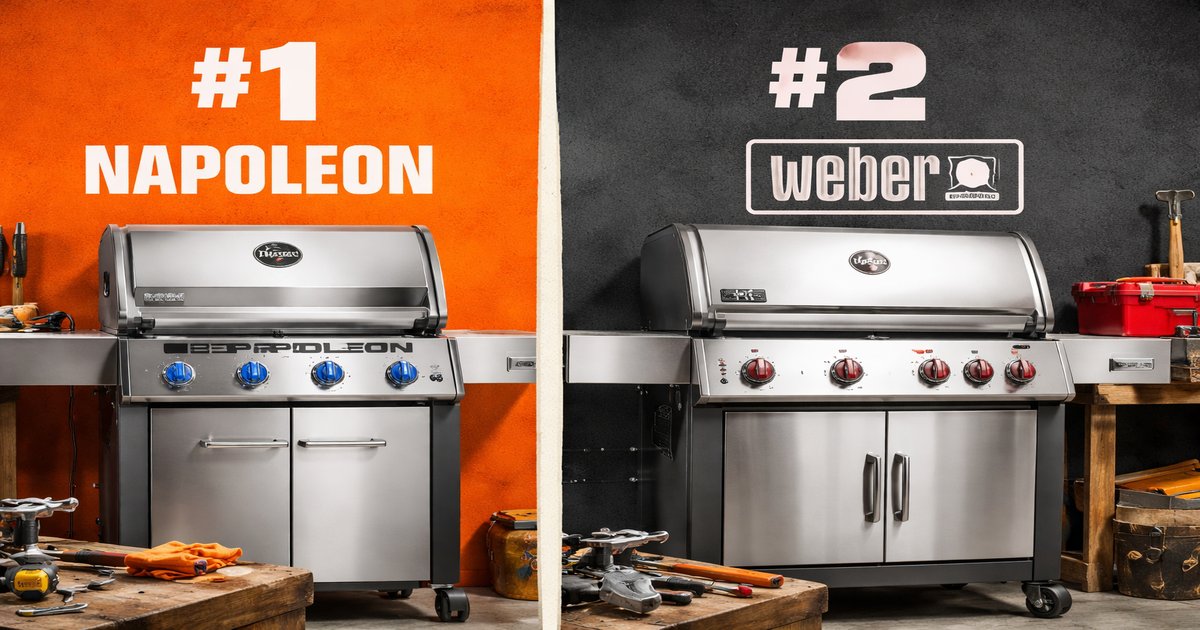
Napoleon vs Weber: Which One Is Actually Worth It?
Picture this: it’s a sunny weekend, and you’re eager to fire up the grill for a backyard gathering. But when you step outside, you’re faced with a choice between two heavyweights in the grilling world: Napoleon and Weber. Both promise to deliver that perfect sear, but which one deserves a spot in your backyard?
| Specification | Napoleon | Weber |
|---|---|---|
| Primary Cooking Area (sq. in.) | 500 | 513 |
| Total BTUs | 48,000 | 43,500 |
| Number of Burners | 4 | 3 |
| Side Burner | ✓ | ✓ |
| Infrared Burner | ✓ | ✗ |
| Wi-Fi Connectivity | ✗ | ✓ |
✅ Napoleon Pros
- Higher total BTUs for more power.
- Equipped with an infrared burner for perfect searing.
- Stainless steel construction offers durability.
❌ Napoleon Cons
- Pricier than most comparable models.
- Lacks smart technology features.
✅ Weber Pros
- Wi-Fi connectivity for remote monitoring.
- Great reputation for even heat distribution.
- More affordable entry-level options.
❌ Weber Cons
- Lower BTUs compared to Napoleon.
- Absence of an infrared burner limits searing capability.
Performance: Power vs. Precision
When it comes to raw power, Napoleon pulls ahead with its 48,000 BTUs spread across four burners. This means faster heating and a wider range of temperatures for those sizzling steaks. The infrared burner is a game-changer for searing, giving you that restaurant-quality crust. On the flip side, Weber’s 43,500 BTUs might seem lower, but it compensates with superior heat distribution. You’ll rarely find a cold spot on a Weber grill, which is crucial for consistent cooking, especially if you love grilling delicate foods like fish or veggies.
Build Quality: Durability Matters
Napoleon grills are built like tanks with their stainless steel construction. They’re designed to withstand the elements, making them a favorite for those who grill year-round. This durability doesn’t come cheap, though. Weber, while still solidly built, uses a mix of materials that prioritize affordability without sacrificing too much on longevity. If you’re the type who enjoys grilling but doesn’t need top-tier materials, Weber offers a balanced approach.
Value: Features vs. Cost
Napoleon offers premium features like the infrared burner, but you’re paying a premium price for those extras. If you’re an avid griller who demands versatility, it’s worth the investment. Weber, however, excels in providing value with its smart features like Wi-Fi connectivity. This is perfect for tech enthusiasts who want to keep an eye on their grill from afar. For weekend warriors who grill occasionally, Weber’s entry-level models are hard to beat in terms of value for money.
While both Napoleon and Weber are solid choices, keep in mind that Napoleon’s high BTUs also mean higher fuel consumption. If you’re grilling frequently, this can add up. Weber’s smart connectivity is handy, but it’s not a replacement for learning how to manage heat and timing manually, so don’t rely entirely on it.
Our Final Verdict: Which One Should You Buy?
If you’re a grilling aficionado who craves precision and power, Napoleon is your go-to. It’s perfect for the seasoned griller who wants every tool at their disposal. On the other hand, if you’re a tech-savvy weekend warrior who appreciates convenience and value, Weber is your match. It’s excellent for those who grill occasionally but still want quality results.
Is the assembly process complicated for Napoleon and Weber grills?
Assembly can be a bit challenging for both, but Weber generally provides clearer instructions. Napoleon’s models might require more time due to additional features.
Can I use natural gas with both Napoleon and Weber grills?
Yes, both brands offer models that can be converted to natural gas. Just make sure to purchase the correct conversion kit for your specific model.
How long can I expect these grills to last?
With proper maintenance, both Napoleon and Weber grills can last over a decade. Weber’s reputation for longevity is well-earned, while Napoleon’s robust build ensures it can withstand frequent use.
