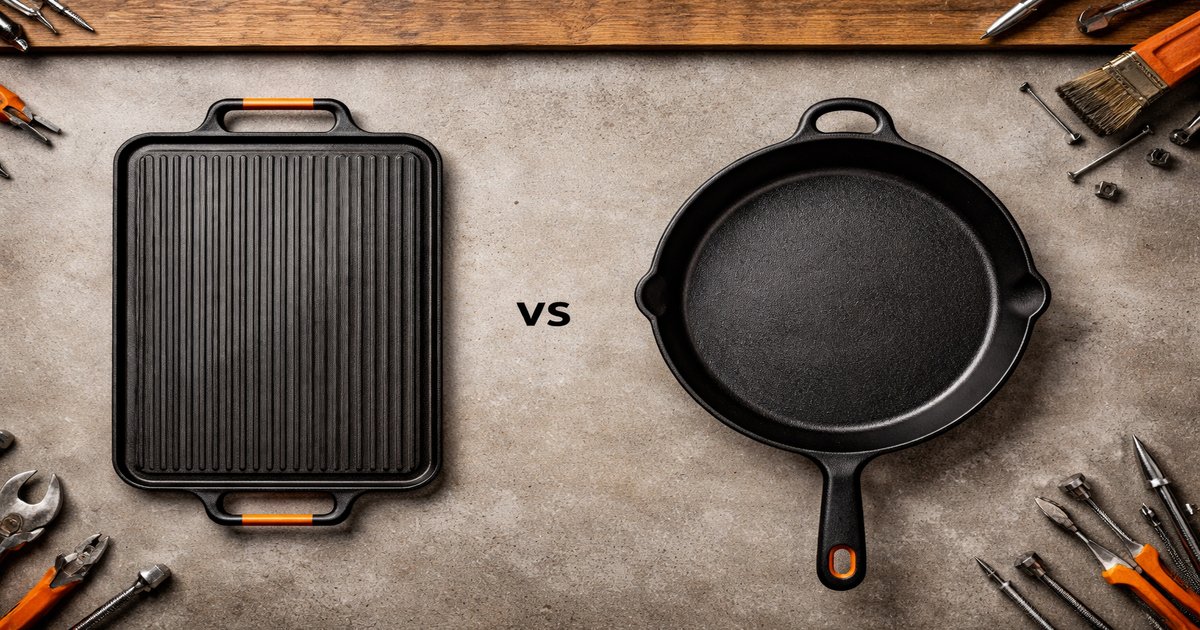
Griddle vs Skillet: Which One Is Actually Worth It?
Imagine this: it’s Saturday morning, and you’re whipping up breakfast for family or friends. You’re eyeing those pancakes, bacon, and eggs, but you’re stuck deciding between a griddle and a skillet. Each has its own charm, but which one will deliver that perfect breakfast spread?
| Feature | Griddle | Skillet |
|---|---|---|
| Cooking Surface Area | 200+ sq inches | 50-100 sq inches |
| Heat Distribution | Even | Varies |
| Versatility | ✓ | ✓ |
| Portability | ✗ | ✓ |
| Price Range | $50-$150 | $20-$100 |
| Dishwasher Safe | ✗ | ✓ |
✅ griddle Pros
- Large cooking surface for multiple items at once.
- Consistent heat distribution.
- Excellent for grilling and breakfast spreads.
❌ griddle Cons
- Bulky and less portable.
- Not always dishwasher safe.
- Can be more expensive.
✅ skillet Pros
- Compact and portable.
- Often dishwasher safe for easy cleaning.
- More affordable options available.
❌ skillet Cons
- Limited cooking surface area.
- Heat distribution can vary.
- Not ideal for cooking multiple items at once.
Performance
When it comes to performance, the griddle shines in cooking for a crowd. Its large, flat surface allows you to cook pancakes, bacon, and eggs simultaneously without the hassle of juggling pans. The even heat distribution ensures everything cooks at the same rate, making it a breakfast champion. On the other hand, the skillet is your go-to for quick, smaller meals. It’s perfect for sautéing veggies or searing a steak due to its ability to handle high heat. However, if you’re cooking for more than two, expect some frustration with the skillet as you’re forced to cook in batches.
Build Quality
Griddles are typically robust, designed to handle large quantities of food over sustained periods. They often come with non-stick surfaces that make flipping pancakes a breeze, but these surfaces can wear down with heavy use. Skillets, especially those made from cast iron, offer unparalleled durability and can last for decades if properly maintained. They develop a non-stick surface over time, but require regular seasoning to stay in top condition. If you’re the type who wants a piece of equipment that will stand the test of time, a good cast iron skillet might be your best bet.
Value for Money
If you’re weighing the value, consider how often you’ll need the expansive cooking space of a griddle. For frequent entertainers or large family breakfasts, a griddle is worth the investment. However, if you’re a solo cook or have a small household, a skillet offers great versatility at a lower price. The initial cost of a skillet is generally lower, and with options like cast iron, you get a product that improves with age. The griddle, though potentially more expensive upfront, pays off if you’re frequently cooking for groups or hosting brunches.
Griddles can be a pain to store due to their size. They take up significant counter or cupboard space, something to think about if your kitchen is on the smaller side. Meanwhile, skillets are often touted for their easy clean-up, but beware of the maintenance required for cast iron versions. Skipping the seasoning process can lead to rust and a sticky surface.
Our Final Verdict: Which One Should You Buy?
If you’re the host with the most, whipping up feasts for crowds, the griddle is your ally. It handles volume like a champ and excels at big breakfasts. But if you’re a small household or value portability and easy clean-up, the skillet is your trusty sidekick. It’s versatile, affordable, and gets the job done for everyday meals.
Can a griddle replace a skillet in most cooking tasks?
Not entirely. While a griddle is excellent for large meals and breakfast items, it lacks the depth required for tasks like frying or making sauces that a skillet handles well.
Is a cast iron skillet better than a non-stick one?
Cast iron skillets are more durable and improve over time with proper care, while non-stick skillets are easier to use for beginners but can wear out faster.
How do you maintain a griddle?
Regular cleaning with mild soap and water, avoiding metal utensils, and keeping it dry will help maintain its non-stick surface and prevent wear.
