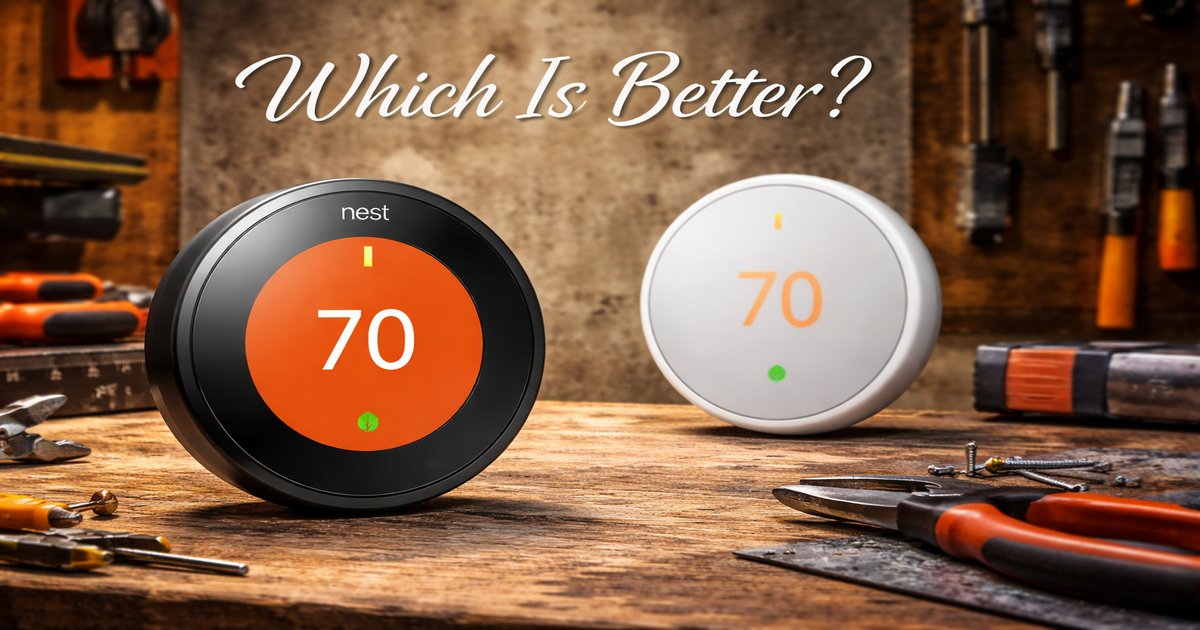
Is Nest Thermostat Better Than Nest Thermostat E? We Break It Down
So, you’re looking to upgrade your home’s heating and cooling system, but you can’t decide between the Nest Thermostat and the Nest Thermostat E. Maybe you’re wondering if the extra bucks for the Nest Thermostat are really worth it or if the more budget-friendly Nest Thermostat E will do the trick. Let’s break it down so you can make the best choice for your smart home setup.
| Feature | Nest Thermostat | Nest Thermostat E |
|---|---|---|
| Display | Color LCD | Frosted Display |
| Resolution | 480 x 480 pixels | 320 x 320 pixels |
| Ring Material | Metal | Plastic |
| Price | $249 | $169 |
| Energy Star Certified | ✓ | ✓ |
| Wi-Fi Connectivity | ✓ | ✓ |
✅ nest thermostat Pros
- High-resolution color screen that’s easy to read.
- Premium metal design looks sleek.
- Advanced learning algorithms for precise control.
❌ nest thermostat Cons
- Higher price point compared to alternatives.
- Installation might require professional help.
- Some features can be overwhelming to less tech-savvy users.
✅ nest thermostat e Pros
- More affordable, offering great value for money.
- Simple and intuitive interface.
- Blends in with home decor due to frosted display.
❌ nest thermostat e Cons
- Lower display resolution can be hard to read from afar.
- Plastic build feels less premium.
- Fewer compatibility options for complex systems.
Performance
Both thermostats boast energy-saving capabilities, but the Nest Thermostat’s advanced learning algorithms take the cake when it comes to performance. It learns your schedule over time, adjusting the temperature precisely to save energy without sacrificing comfort. On the other hand, the Nest Thermostat E offers a more straightforward experience. If you’re someone who prefers setting things manually or sticking to a basic schedule, the Nest Thermostat E will work just fine without the added complexity.
Build Quality
The Nest Thermostat is the clear winner in terms of build quality. Its metal ring exudes a premium feel and instantly upgrades the aesthetic of any room. Meanwhile, the Nest Thermostat E, with its plastic ring and frosted display, feels more utilitarian. It’s not exactly an eyesore, but it won’t impress your tech-savvy friends either. If having a sleek-looking device is important to you, the original Nest Thermostat is worth the splurge.
Value
If you’re budget-conscious, the Nest Thermostat E is an excellent choice, providing essential smart thermostat features without breaking the bank. It’s perfect for those who want smart control without the frills. However, if you’re looking for top-tier performance and aesthetics to match, the extra $80 for the Nest Thermostat gets you a more refined experience. You’ll appreciate the high-resolution display and the advanced learning capabilities in the long run.
What most reviews don’t tell you is that both models might require a C-wire for installation, which could mean hiring an electrician if your home doesn’t have one. Also, while both devices promise energy savings, the actual savings you see will heavily depend on your home’s insulation and climate. Don’t expect miracles just because you have a smart thermostat.
Our Final Verdict: Which One Should You Buy?
If you’re someone who values aesthetics and cutting-edge technology, go for the Nest Thermostat. It’s ideal for tech enthusiasts who love the finer details. For those on a budget or who just want something simple and effective, the Nest Thermostat E is a solid, no-nonsense choice. It gets the job done without all the bells and whistles, making it perfect for minimalists or renters.
Is the Nest Thermostat compatible with my HVAC system?
Check compatibility using the Nest compatibility checker online. Both models support most HVAC systems but may require a C-wire for optimal performance.
How easy is it to install these thermostats?
Installation is relatively straightforward if you have a C-wire. Without one, you might need a professional to help with wiring.
Do these thermostats really save money on energy bills?
Yes, both models can help reduce energy costs, but the actual savings depend on your usage patterns and the insulation quality of your home.
