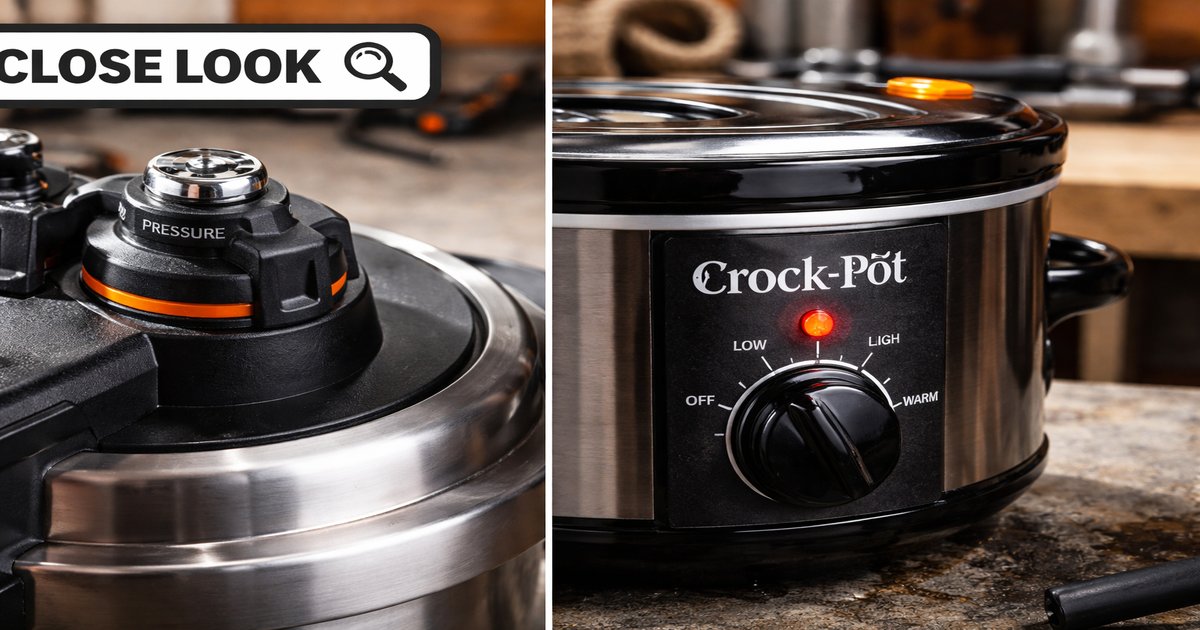
Pressure Cooker vs Crock Pot: An Honest Side-by-Side Comparison
You’re racing against time to get dinner ready after a long day, and the last thing you want is to babysit your kitchen appliances. Enter the pressure cooker and the crock pot, two popular kitchen companions that promise to save you time and hassle. But which one really delivers on its promise?
| Feature | Pressure Cooker | Crock Pot |
|---|---|---|
| Cooking Time | 10-60 mins | 4-8 hours |
| Energy Efficiency | High | Medium |
| Ease of Use | Moderate | Easy |
| Versatility | ✓ | ✗ |
| Price Range | $50-$200 | $20-$100 |
| Maintenance | Moderate | Low |
✅ pressure cooker Pros
- Drastically reduces cooking time, ideal for last-minute meals.
- Energy efficient, cutting down on electricity usage.
- Versatile enough to handle meats, grains, and even desserts.
❌ pressure cooker Cons
- Requires a learning curve to master safety and settings.
- Can be intimidating with its pressurized steam release.
- Higher upfront cost compared to crock pots.
✅ crock pot Pros
- Perfect for hands-off cooking; set it and forget it.
- Budget-friendly, making it accessible to more households.
- Simple operation with minimal buttons and settings.
❌ crock pot Cons
- Takes a long time to cook, not suited for last-minute meals.
- Limited to slow-cooked meals; lacks versatility.
- Consumes more energy over extended cooking periods.
Performance: Speed vs. Patience
When you’re in a rush, the pressure cooker is a game-changer. It can whip up a stew in under an hour, which is a godsend when you need to feed a hungry family fast. On the flip side, the crock pot is for the patient cook who prefers waking up to a perfectly cooked breakfast or coming home to a ready dinner. If you can plan ahead, the crock pot’s long, slow cooking process can yield flavors that develop deeply over time, but it doesn’t have the speed of a pressure cooker.
Build Quality: Complexity vs. Simplicity
Pressure cookers are built like tanks to handle high pressure, and this can make them feel a bit daunting. They come with a variety of settings and safety features, which means more parts and a bit more complexity in cleaning. Crock pots, however, are simplicity incarnate. With fewer parts and a straightforward design, they are easy to clean and maintain. If you value simplicity and ease of maintenance, the crock pot is your friend.
Value: Investment vs. Affordability
Pressure cookers tend to have a higher price tag but also offer more cooking options, essentially acting as multiple appliances in one. This is a great investment if you plan to expand your cooking repertoire. Crock pots are generally cheaper and do one thing well: slow cooking. If you’re on a budget or only need it for basic meals, the crock pot offers solid value without frills.
Pressure cookers can be noisy, especially when releasing steam, which might not be ideal if you have a sleeping baby or want a quiet kitchen. Crock pots, while great for slow cooking, can leave you with a watery dish if you don’t adjust the liquid amounts, something many first-time users overlook.
Our Final Verdict: Which One Should You Buy?
If you’re a busy professional or parent needing quick meal solutions, the pressure cooker is your best bet. It’s versatile and efficient, making it worth the investment. For those who love the idea of coming home to a slow-cooked meal without babysitting the process, the crock pot is perfect. Its simplicity and affordability make it ideal for beginners or those who enjoy traditional, slow-cooked flavors.
Can I use a pressure cooker as a crock pot?
Many modern electric pressure cookers come with a slow-cook function, but they may not perfectly replicate the crock pot’s results due to different heat distribution.
How long does a pressure cooker last?
With proper maintenance, a good quality pressure cooker can last anywhere from 5 to 10 years, although seals and gaskets may require replacement over time.
Is it safe to leave a crock pot unattended?
Yes, crock pots are designed to be left unattended for several hours, making them ideal for slow-cooked meals while you’re away from home.
