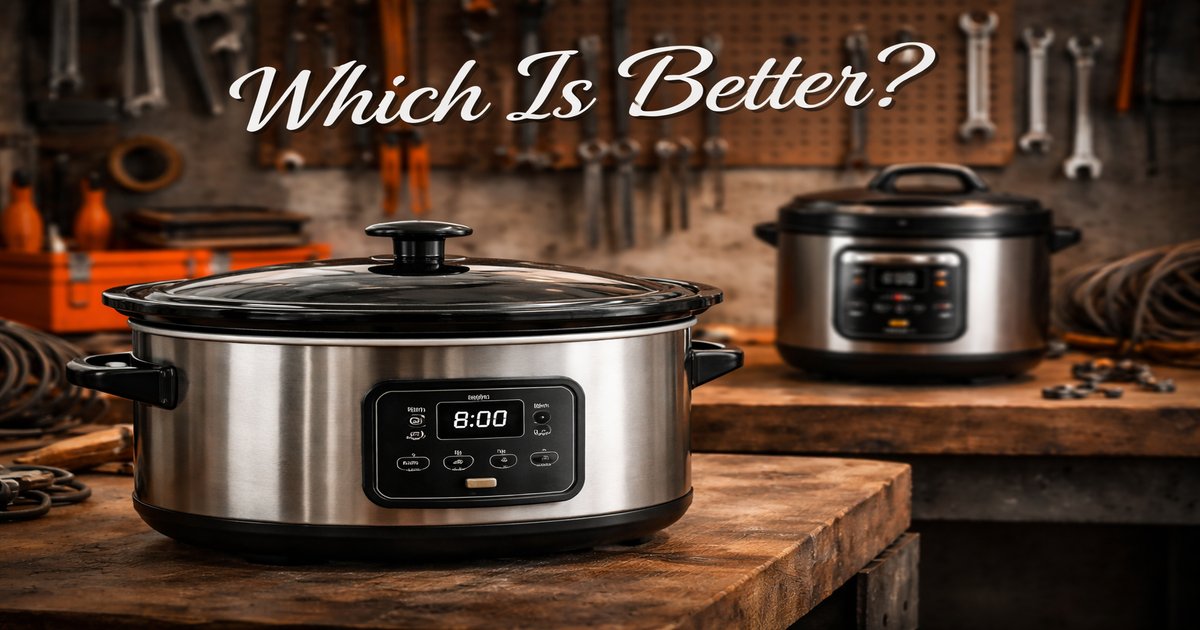
Slow Cooker vs Pressure Cooker: Which Should You Buy in 2026?
You’ve decided to up your cooking game, but now you’re faced with a choice: should you go for the slow cooker that promises tender, juicy meals with minimal effort, or the pressure cooker that boasts speedy cooking times? If you want to make meal prep a breeze, understanding the difference between these two kitchen appliances is crucial.
| Feature | Slow Cooker | Pressure Cooker |
|---|---|---|
| Cooking Time | 4-8 hours | 30 minutes – 2 hours |
| Cooking Method | Low heat simmering | High pressure steam |
| Ease of Use | ✓ | ✓ |
| Versatility | ✗ | ✓ |
| Price Range | $30 – $150 | $50 – $300 |
| Energy Consumption | Low | Moderate |
| Safety Features | Basic | Advanced |
✅ slow cooker Pros
- Perfect for unattended cooking — set it and forget it.
- Great for tenderizing cheaper cuts of meat.
- Low energy consumption makes it wallet-friendly.
❌ slow cooker Cons
- Not suitable for quick meals.
- Lacks versatility in cooking methods.
- Requires pre-planning due to long cooking times.
✅ pressure cooker Pros
- Drastically reduces cooking time.
- Extremely versatile — can sauté, steam, and slow cook.
- Advanced safety features for peace of mind.
❌ pressure cooker Cons
- Higher upfront cost compared to slow cookers.
- Can be intimidating for beginners due to pressure settings.
- Consumes more energy compared to slow cookers.
Performance
The slow cooker is your go-to for rich flavors developed over time — think pot roasts simmering for hours. Its gentle heat allows flavors to meld beautifully, but it’s not the tool for when you’re in a rush. On the other hand, the pressure cooker is the king of speed without sacrificing taste. It can turn tough meats tender in under an hour, making it a lifesaver for last-minute dinner plans. If time is of the essence, the pressure cooker is unbeatable.
Build Quality
Most slow cookers are straightforward — a ceramic pot within a heating unit. They’re generally durable, but the ceramic can crack if mishandled. Pressure cookers, especially electric ones, are more complex with digital controls, stainless steel build, and multiple safety valves. This complexity means there’s more that can go wrong, but also more room for precision. If you want a robust, versatile machine, the pressure cooker edges out for build quality.
Value
Slow cookers are budget-friendly and have a low cost of operation, making them ideal if you’re penny-pinching. They excel in making large batches of food with minimal fuss. Pressure cookers, despite the higher initial investment, offer greater versatility, potentially replacing multiple appliances. If you love experimenting in the kitchen, the added cost is justified for the numerous functions it packs.
What many reviews gloss over is the learning curve for pressure cookers. They’re not just plug-and-play — you need to understand pressure settings and release methods. Slow cookers are simpler, but you might tire of the same stews and soups. Also, bear in mind that slow cookers can crowd your counter space for hours, which might be a dealbreaker for small kitchens.
Our Final Verdict: Which One Should You Buy?
If your life is a juggling act of errands, work, and family, a pressure cooker will suit you best. It’s perfect for those who need dinner ready fast without compromising on flavor. On the flip side, if you’re someone who loves walking into the house to the smell of a meal that’s been lovingly simmering all day, a slow cooker is your culinary soulmate.
Can I use a pressure cooker for slow cooking?
Yes, many modern pressure cookers come with a slow cooking function, offering you the best of both worlds.
Do slow cookers consume a lot of electricity?
No, slow cookers are designed to be energy-efficient, using about as much power as a light bulb.
How long do these appliances typically last?
With proper care, both slow cookers and pressure cookers can last upwards of 5-10 years. Regular maintenance and careful handling will extend their lifespan.
