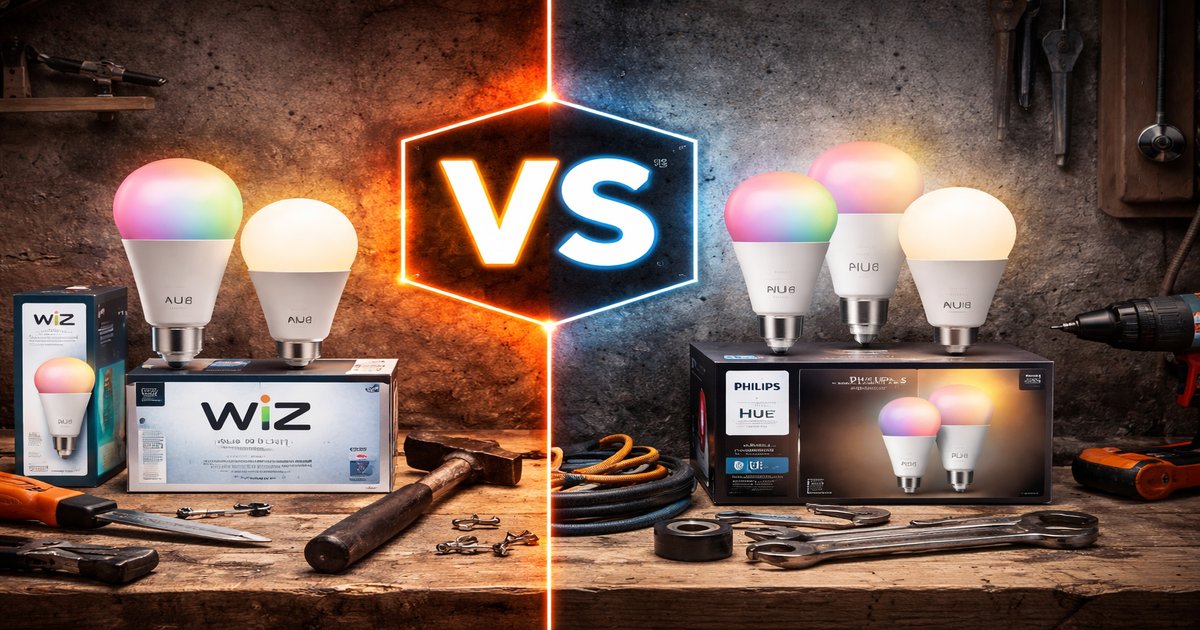
Wiz vs Philips Hue: Which One Is Actually Worth It?
You’re setting up your smart home, and the lighting is the crown jewel. Imagine controlling the mood with just a tap on your phone. But should you go for Wiz or Philips Hue? Let’s cut through the clutter and find out which smart bulb system is your perfect match.
| Spec | Wiz | Philips Hue |
|---|---|---|
| Connectivity | Wi-Fi | Bridge + Zigbee |
| Color Options | 16 million | 16 million |
| App Control | ✓ | ✓ |
| Voice Assistant | Google Assistant, Alexa | Google Assistant, Alexa, Apple HomeKit |
| Hub Required | ✗ | ✓ |
| Price Range | $10-$20 per bulb | $15-$60 per bulb |
✅ wiz Pros
- No hub required, just plug and play.
- Competitive pricing for budget-minded users.
- Wide compatibility with smart assistants.
❌ wiz Cons
- Limited features compared to more advanced systems.
- Wi-Fi connectivity can be unreliable with many devices.
✅ philips hue Pros
- Extensive ecosystem with more lighting options.
- Reliable connectivity with the Hue Bridge.
- Integration with Apple HomeKit for iOS users.
❌ philips hue Cons
- Higher upfront cost due to the required hub.
- Complex setup if you’re not tech-savvy.
Performance
Philips Hue shines here with its robust Zigbee connectivity, ensuring that your commands are executed smoothly without any lag. It’s perfect for a larger smart home setup where reliability is key. On the other hand, Wiz relies solely on Wi-Fi, which might falter if your network is overloaded. However, for a smaller apartment with limited devices, Wiz performs adequately without needing a separate hub.
Build Quality
Philips Hue bulbs are built like tanks. They’re durable and have a premium feel, which justifies their higher price point. They seem to last forever and can withstand frequent adjustments without losing brightness. Wiz bulbs, while not flimsy, don’t exude the same level of quality. They get the job done but might need replacing sooner if you’re constantly changing settings.
Value for Money
If your wallet is tight, Wiz is appealing because it offers a competent set of features at a fraction of the price. It’s great for entry-level users who want to dip their toes into smart lighting without a big investment. Philips Hue, while pricier, offers long-term value with its extensive ecosystem and reliable performance, making it a worthwhile investment for the serious smart home enthusiast.
Wiz might seem like a no-brainer for budget-conscious buyers, but beware of its dependence on Wi-Fi; it can be a headache if your network isn’t rock solid. Philips Hue, while generally excellent, can be a nightmare to set up if you’re not tech-savvy, especially with its hub requirement.
Our Final Verdict: Which One Should You Buy?
If you’re just starting out and want a straightforward, budget-friendly option, go with Wiz. It’s perfect for someone living in a smaller space who values simplicity over bells and whistles. However, if you crave a more integrated and robust system with the potential to expand into a high-tech smart home, Philips Hue is your go-to. It’s especially great for tech enthusiasts who don’t mind paying a premium for reliability and advanced features.
Is Wiz compatible with Apple HomeKit?
No, Wiz does not currently support Apple HomeKit. It works with Google Assistant and Amazon Alexa.
Do I need a hub for Philips Hue?
Yes, Philips Hue requires the Hue Bridge for optimal performance and to access all features.
How long do these bulbs last?
Philips Hue bulbs typically last around 25,000 hours, while Wiz bulbs offer about 15,000 hours of use.
